


11/01/2026
Entire blog as a free PDF eBook.
I was just on my way back to Vienna from a short trip to Poland when I learned that the “kindergarten kids” involved in the sandbox brawl between PO and PiS had escalated their squabbles over toys “in defense of the Constitution” to a higher level—the level of violence.
The years-long battle between two parties—both controlled by foreign states and organizations—over the politicization of the Constitutional Tribunal has entered a new phase: the phase of violent confrontation.
Telewizja Republika was the first to report on the police entering the grounds of the Constitutional Tribunal. Shortly thereafter, the police confirmed these reports and published official statements from police headquarters and the capital city police on social media.
In the official statement, the police emphasized that the officers had not actually entered the Constitutional Tribunal building itself. Source.
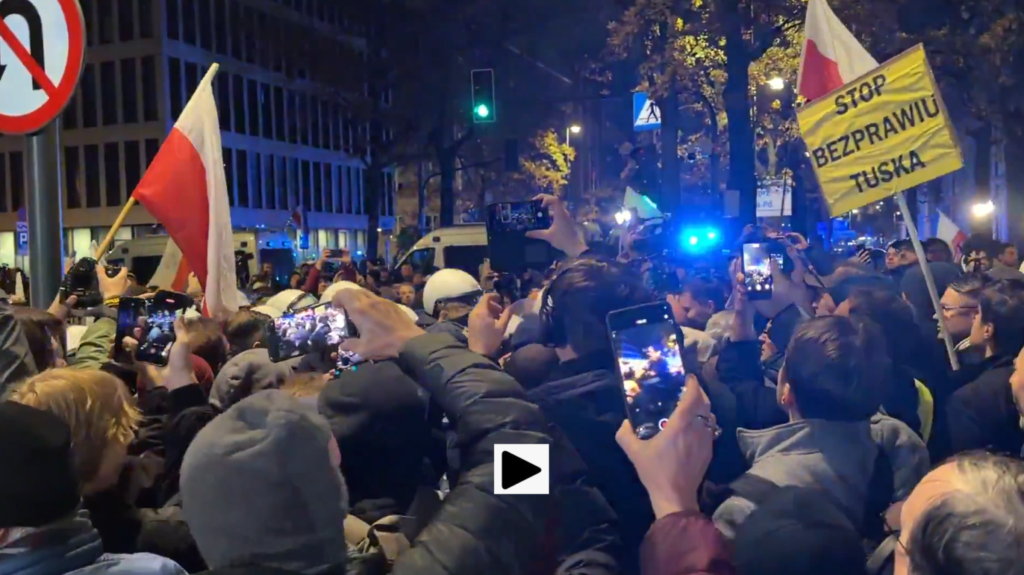
Source: Telegram, October 31, 2026, 12:52 a.m.
A coup d’état organized by a puppet prime minister? Polish politicians don’t make decisions like that. At least not since the May Uprising 100 years ago. Politicians are there to carry out orders, not to act independently. Independence is the opposite of obedience, a trait that characterizes most politicians—and not just in Poland. To back up his demands for an unlawful transfer of the office of President of the Constitutional Court to a judge who had not yet been sworn in, Mr. Tusk had a police unit deployed in front of the Constitutional Court building. The police allegedly did not enter the building, and now Tusk can claim that they were there merely to “protect” the demonstrators. Such a precautionary measure is not exactly the best idea for a successful coup.
During the May Coup (May 12–15, 1926), 379 people lost their lives. Of course, I do not support any coups, especially bloody ones. I merely wish to point out the differences. In December 2024, former South Korean President Jun Suk Jeol was sentenced to life in prison following a failed coup attempt in South Korea. Source.
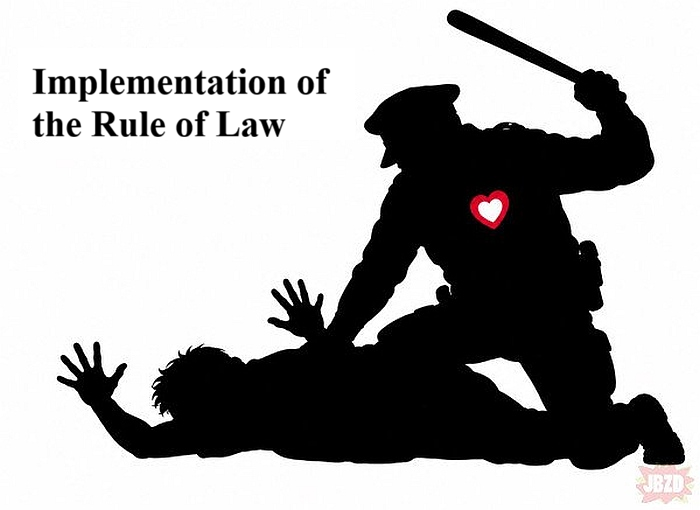
In principle, judges should be neutral—especially politically. However, this assumption is merely an ideal, and there isn’t a single judge who doesn’t hold political views. Many of them are able to set aside the influence of their own views to a greater or lesser extent, but only a few truly succeed in doing so. I do not doubt their sincere intentions, if such intentions even exist. It is a matter of psychology and the mostly unconscious external influences on one’s way of thinking, such as those from television.
This is happening just a few days before the important elections for both chambers in the U.S. You might say: The Constitutional Court is a Polish matter! Sure, but the attack on the Constitutional Court is already an international matter, as it demonstrates the decay of all the mechanisms intended to protect this—as we can see—not exactly exemplary democracy. This fits perfectly into the global trends toward restricting all democratic rights.

What impact will this attempted coup have on the future European order? Andrzej Korybko analyzes this in his article published yesterday: Poland’s Attempted Judicial Coup Will Shape The Post-War European Order.
If Tusk’s attempted judicial coup succeeds, then Poland will become subordinated to Germany, but its failure would empower Poland’s rise as a regional power. Trump and Nawrocki are friends, they have similar views, and neither wants liberal Germany dominating the EU. Trump might therefore throw his country’s weight around to tip the balance of Poland’s worst political crisis since the end of communism in Nawrocki’s favor, but if the German-led EU pushes back, then it could spark another US-EU crisis.
Author of the article: Marek Wojcik
Email: worldscam3@gmail.com
<If you like what I write, it would help a lot to further spread these articles if you share them with your friends on social media.